You have decided you want the cord of three strands in your ceremony, you have watched the videos, and now you are staring at a blank document trying to figure out what your officiant actually says while you braid. That is the hard part. Most of what you find online is either a shop trying to sell you a cord or a four-sentence template that leaves everyone standing there in silence. So here is a full cord of three strands ceremony script you can hand to your officiant word for word, with the scripture, the timing, the staging notes, and a shorter version if your ceremony is running long.
Everything below is written to be read aloud. Swap in your names, keep what fits your church, cut what does not.
What the Cord of Three Strands Ceremony Means
The cord of three strands (sometimes called God's knot or the unity braid) comes straight out of Ecclesiastes. Solomon is writing about why two people are better than one, and then he pushes the image one step further:
"Though one may be overpowered, two can defend themselves. A cord of three strands is not quickly broken." (Ecclesiastes 4:12)
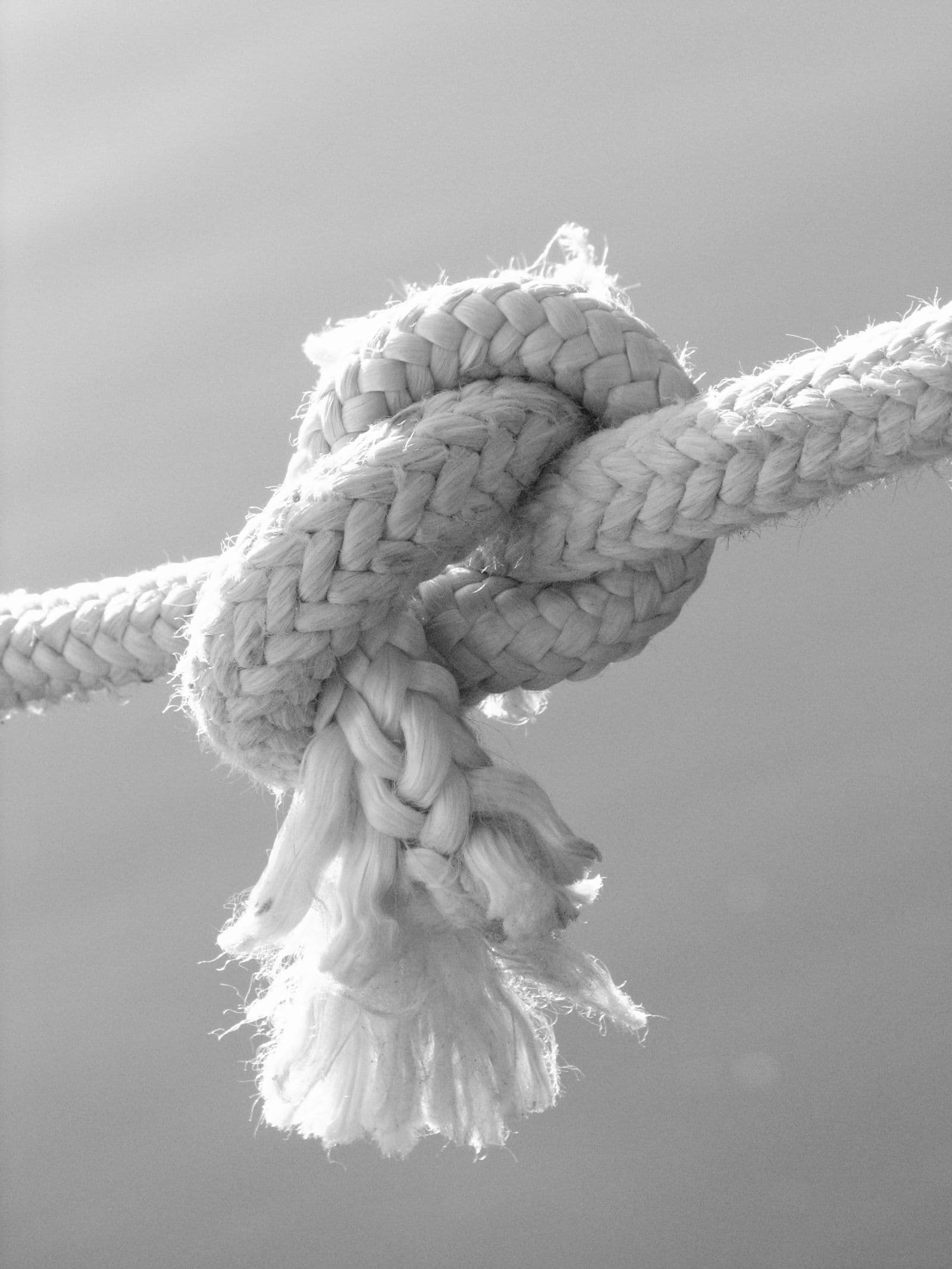
Three cords braided together are stronger than three laid side by side. The strength is not in any single strand, it is in the weave. Here is what each strand carries:
- The center strand is God. Usually gold or white. It is the strand that holds the braid together, and in most versions of the ritual it is anchored first and never let go.
- The second strand is the bride. Her color, her family, everything she brings to the marriage.
- The third strand is the groom. Same idea, his own color.
The braid only works when all three move together. That is the sermon, and honestly it preaches itself in about forty seconds, which is why this ritual lands so well with guests who are not churchgoers. Nobody has to explain it twice.
Where the Cord of Three Strands Fits in Your Ceremony Order
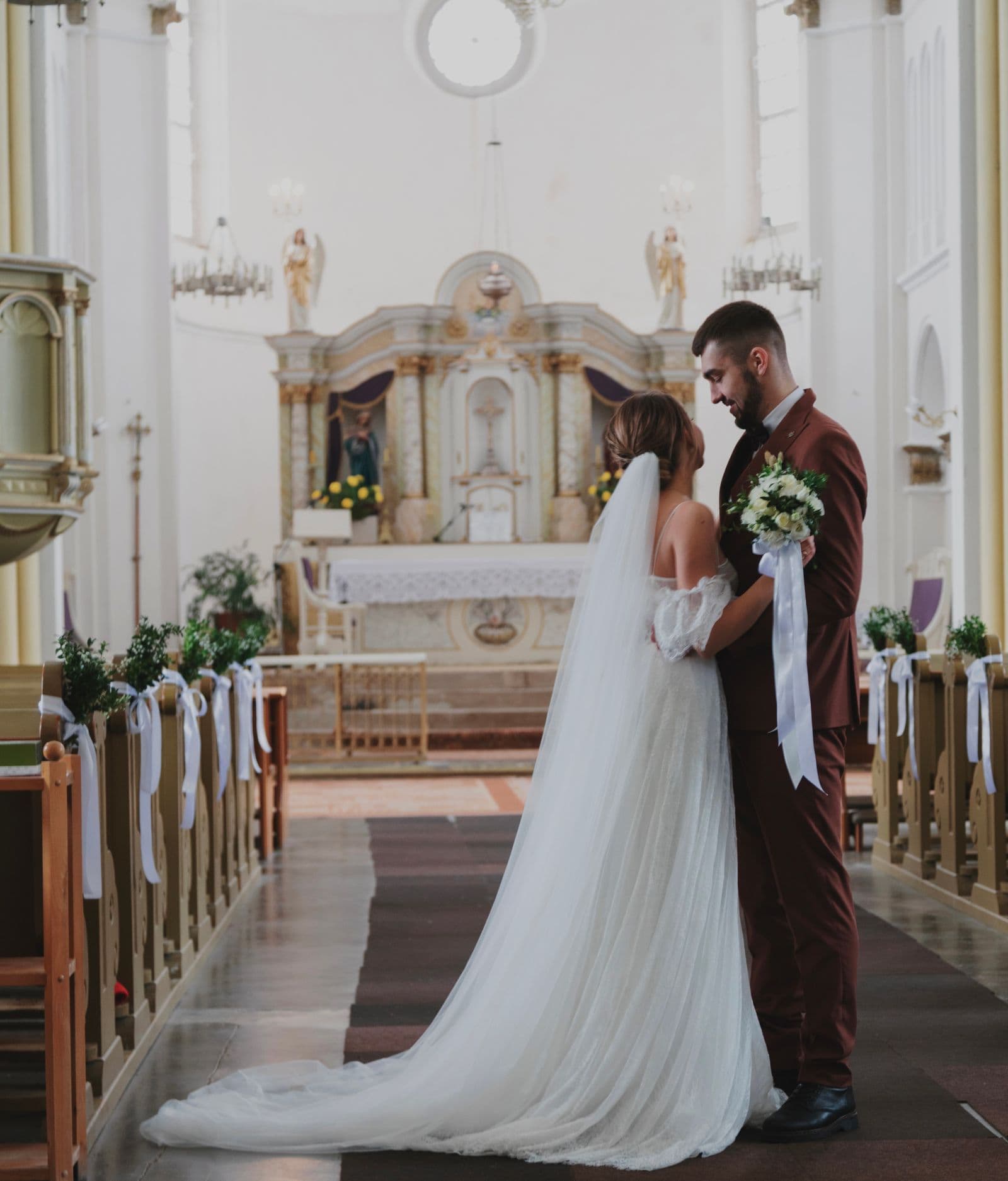
Put it after the ring exchange and before the pronouncement. That is the placement that makes narrative sense: you have made your promises, you have exchanged the symbols of those promises, and now you do one last thing together as your first act as a married couple in the making.
A typical slot looks like this:
- Vows
- Ring exchange
- Cord of three strands (three to five minutes)
- Prayer over the couple
- Pronouncement and first kiss
Some couples put it right after the homily instead, which works if you want the braid to sit under a worship song rather than at the emotional peak. If you are still building the whole sequence, our guide to the Christian wedding ceremony order walks through every element and where it belongs. And if you are still deciding between rituals, the roundup of Christian unity ceremony ideas compares the cord to the unity candle, communion, and foot washing.
How long does it take?
Plan for three to five minutes from the officiant's first word to the pronouncement cue. The braiding itself takes about ninety seconds if you have practiced, closer to three minutes if you have not. Practice it. Twice.
Staging Notes: Cords, Colors, and Who Holds What
The script falls apart if the logistics are wrong, so settle these before the rehearsal.
- Cord length: about 36 to 40 inches each. Shorter than that and you run out of braid before the reading ends. Longer and it drags on the floor.
- Thickness: roughly a quarter inch. Thin satin ribbon looks pretty up close and disappears from row eight. Braided cord or thick rope photographs far better.
- Colors: gold or white for God, then your two wedding colors. Purple for royalty, red for the blood of Christ, and green for new life are all common if you want the colors themselves to carry meaning.
- The anchor: you need something holding the three cords at the top. A small wooden stand, a cross-shaped holder, or a member of the wedding party gripping the knot all work. The stand is easier, and it means nobody has to stand awkwardly in your photos.
- Who braids: the two of you, one strand each in your outside hand, with the God strand fixed in the center. Bride takes her strand, groom takes his, and you cross them over the center strand in turn.
- Where it happens: slightly to the side of center, angled toward the guests, so the photographer gets your faces and not the back of your heads. Ask your officiant to step back a pace once the braiding starts.
- Afterward: tie off the end with a small ribbon, and decide in advance who carries the braid out. Hang it in your home. It should not live in a box in the garage.
The Full Cord of Three Strands Ceremony Script
Give this to your officiant as written. Stage directions are in brackets. The sample names here are Anna and Caleb; replace them with yours.
Part 1: The officiant introduces the cord
[Officiant steps toward the cord stand. Couple turns to face each other, then toward the stand.]
"Anna and Caleb have chosen to close this ceremony with something older than either of them. It comes from a line in Ecclesiastes, written about three thousand years ago by a man who had watched a lot of people try to do life alone.
He wrote that two are better than one. And then he said something more than that."
Part 2: The scripture reading
[Officiant reads, or cues a reader. If a reader is used, they come forward now and read from the lectern.]
"A reading from Ecclesiastes, chapter four.
Two are better than one, because they have a good return for their labor. If either of them falls down, one can help the other up. But pity anyone who falls and has no one to help them up. Also, if two lie down together, they will keep warm. But how can one keep warm alone? Though one may be overpowered, two can defend themselves. A cord of three strands is not quickly broken.
This is the word of the Lord."
[If your tradition uses a congregational response, it goes here. Otherwise the officiant continues.]
Part 3: Naming the three strands
"Three cords are laid out here, and each one carries a name.
[Officiant touches or gestures to the center strand.]
This first strand is God. It is set in the center, and it is the one neither of them placed here. Anna and Caleb did not invent this love and they are not the ones holding it together. That has been true of every good thing in their story so far, and it will be true of the years they have not lived yet.
[Gestures to the second strand.]
This second strand is Anna. Her faith, her family, her patience, her whole life up to this moment.
[Gestures to the third strand.]
And this third strand is Caleb. His faith, his family, his steadiness, everything he brings to this marriage.
Alone, each of these can be pulled apart. Two of them together are stronger. But woven with the third, they hold."
Part 4: The braiding
[Music cue: instrumental or a soft worship song begins here and plays under the braiding. The couple steps to the stand and begins.]
"Anna and Caleb, take up your cords now and braid them together.
[Pause. Let them work. Do not fill the silence immediately. Wait about fifteen seconds, then continue slowly over the music.]
Watch what they are doing. Not one strand swallowing another. Not one strand carrying the weight while the others rest. Each one crossing over, again and again, until you cannot tell where one ends and the next begins.
That is what a marriage is. It is not a single grand promise made once on a Saturday in front of everyone you love. It is the crossing over, a thousand small times, for the rest of your lives.
And through every one of those crossings, the center strand holds.
[Wait for the braid to be finished and tied off. Couple turns back toward the officiant.]
Part 5: The blessing over the cord
[Officiant may place a hand over the finished braid. Congregation is invited to bow their heads.]
"Let us pray.
Father, we thank you for this cord and for what it says about the marriage beginning here today. Thank you that you are not a guest at this wedding but the strand running through the middle of it.
Hold Anna and Caleb. In the seasons when they are strong, keep them humble. In the seasons when they are worn thin, be the strength they do not have. When one of them falls, let the other be there to help them up, and when they both fall, catch them.
Make this braid a picture they come back to. Let it hang in their home and remind them, on the ordinary days and on the hard ones, that what you have woven together is not quickly broken.
In Jesus' name, amen."
Part 6: The closing line and transition
[Officiant turns toward the guests.]
"What God has joined together, let no one separate. (Matthew 19:6)
Anna, Caleb, take this cord home with you. Hang it somewhere you will see it. On the days when you feel like the whole thing is fraying, look at it and remember: there are three of you in this."
[Ceremony continues to the pronouncement.]
A Shorter Cord of Three Strands Script (About Two Minutes)
If your ceremony is already long, or if the braiding is happening under a full worship song, use this compressed version instead.
"Anna and Caleb are going to braid three cords together now.
Scripture says it plainly: a cord of three strands is not quickly broken (Ecclesiastes 4:12). The gold strand is God. The other two are Anna and Caleb. Two strands can be pulled apart. Three, woven together, hold.
[Couple braids. Music plays. Officiant waits.]
Father, thank you for what this picture says. Be the strand at the center of this marriage every day they are given. Amen.
What God has joined together, let no one separate."
Ways to Make the Cord Ceremony Your Own
The script above assumes the two of you braid alone. There are good reasons to change that.
- Blended families: use four or five cords and have the children braid alongside you. Change the officiant's naming section to include each child by name. This is one of the most moving versions of the ritual, and it gives kids a real role instead of a symbolic walk down the aisle.
- Parents anchor the cords: both mothers, or both sets of parents, hold the top of the strands while you braid. It says something true about where each of you came from.
- A reader instead of the officiant: a sibling or close friend reads the Ecclesiastes passage while the officiant handles the naming and the prayer. Splitting the voices keeps the section from feeling like a monologue.
- Braid to a specific song: pick something instrumental or quiet enough that the officiant can speak over it. Time the section to the song, not the other way around.
- Add a second verse: Colossians 3:14 ("And over all these virtues put on love, which binds them all together in perfect unity") works beautifully right before the prayer.
How to Explain the Cord in Your Wedding Program
Guests who have never seen this ritual will not know what is happening, and half of them will be too polite to ask. Two sentences in your program fixes it. Something like:
"The Cord of Three Strands. Anna and Caleb will braid three cords together as a picture of Ecclesiastes 4:12, which says that a cord of three strands is not quickly broken. The center strand represents God, and the other two represent the bride and groom."
Put the same explanation on your wedding website so out-of-town guests can read it before they arrive, along with the ceremony start time, directions to the church, and your RSVP form. You can create a free AltarWed wedding website in a few minutes and add a ceremony page that walks guests through what to expect, whether you are marrying at Christ the King Church in Raleigh or a chapel three states away. If you want help with the rest of the wording, our Christian wedding program wording guide has sample text for every section.
Common Questions About the Cord of Three Strands Ceremony
What scripture is the cord of three strands based on?
Ecclesiastes 4:12: "Though one may be overpowered, two can defend themselves. A cord of three strands is not quickly broken." Most officiants read verses 9 through 12 so the passage has its full context.
Who braids the cord, the couple or the officiant?
The couple. The officiant narrates and prays but does not touch the cords. That is the point of the ritual: you are the ones doing the weaving.
What color should each strand be?
Gold or white for the God strand is the most common choice, with your two wedding colors for the other two. There is no rule here, so pick colors that will read clearly in photos and from the back row.
Can we do the cord of three strands if one of us is not a strong believer?
Yes, and many couples do. Talk with your officiant about the wording so the section is honest about where the two of you actually are. A ritual that overstates your faith will feel hollow to you later, and there is a version of this script that is hopeful rather than declarative.
Does the cord of three strands replace the unity candle?
It usually does. Pick one unity ritual, not three. Stacking them turns the most meaningful part of your ceremony into a sequence of chores.
What do we do with the cord afterward?
Hang it. Over a doorway, next to your wedding photo, in the room where you argue most. The keepsake is only doing its job if you can see it.
One last thing. When you practice this at the rehearsal, practice the silence too. The most powerful part of the cord of three strands ceremony is the fifteen seconds where nobody says anything and two hundred people watch you weave. Do not rush it.