You grew up Baptist. He grew up Catholic. You have been to each other's churches, you genuinely like each other's families, and then somebody asked where the wedding will be and the room went quiet. If this is you, take a breath. You are not facing a crisis of faith. You are facing a logistics problem with a lot of feelings attached, and it is very solvable.
This guide walks through planning a mixed-denomination wedding from the decisions that actually matter: whose church hosts, who is allowed to officiate, how to blend two traditions into one ceremony instead of two services stapled together, and how to brief both sets of parents so nobody finds out the hard way.
First, name what this is (and what it is not)
Almost everything online about "blending traditions" is written for interfaith weddings, meaning two different religions. That is a different situation. You and your fiance already share the same Lord, the same Scriptures, and the same core confession. What differs is church government, liturgy, practice, and the rules some churches have about who may marry whom and where. So the work ahead is not theological negotiation. It is three decisions and a few honest conversations.
Make every effort to keep the unity of the Spirit through the bond of peace. (Ephesians 4:3)
Start with whichever church has the firmest rules
Here is the single most useful planning principle for a mixed-denomination wedding: find out which of your two traditions has the least flexibility, and build outward from there. Everything else can flex. That church cannot.
Roughly, from firmest to most flexible:
- Orthodox. Specific requirements about who may marry, where, and who celebrates.
- Catholic. Clear canon law, diocesan paperwork, and real timelines, but more room than people expect.
- Episcopal, Lutheran, Methodist, Presbyterian. Denominational guidelines plus each parish's own customs.
- Baptist, non-denominational, Pentecostal, most community churches. Usually the pastor's call, with wide latitude.
Your very first call is to the church higher on that list. Ask one plain question: "What does your church require when one of us is not a member here?" Write down the answer, including how long the paperwork takes. Then plan the date. Not before.
Catholic and Protestant weddings: what the rules actually say
This is the pairing people worry about most, and it is the one with real, published rules. Getting this right matters, because well-meaning bad advice ("just have both ministers do it together!") can produce a wedding the Catholic Church does not recognize.
When a Catholic marries a baptized Christian from another tradition, the Catholic Church calls it a mixed marriage, and here is the shape of it:
- Permission is required. The Catholic party needs express permission from the local bishop, handled through the parish priest as part of your marriage preparation. It is routinely granted. It is not a formality you can skip.
- The Catholic party makes a promise. To continue living the faith and to do all in their power to have any children baptized and raised Catholic. The other partner is simply informed of that promise. You do not have to make it yourself or convert.
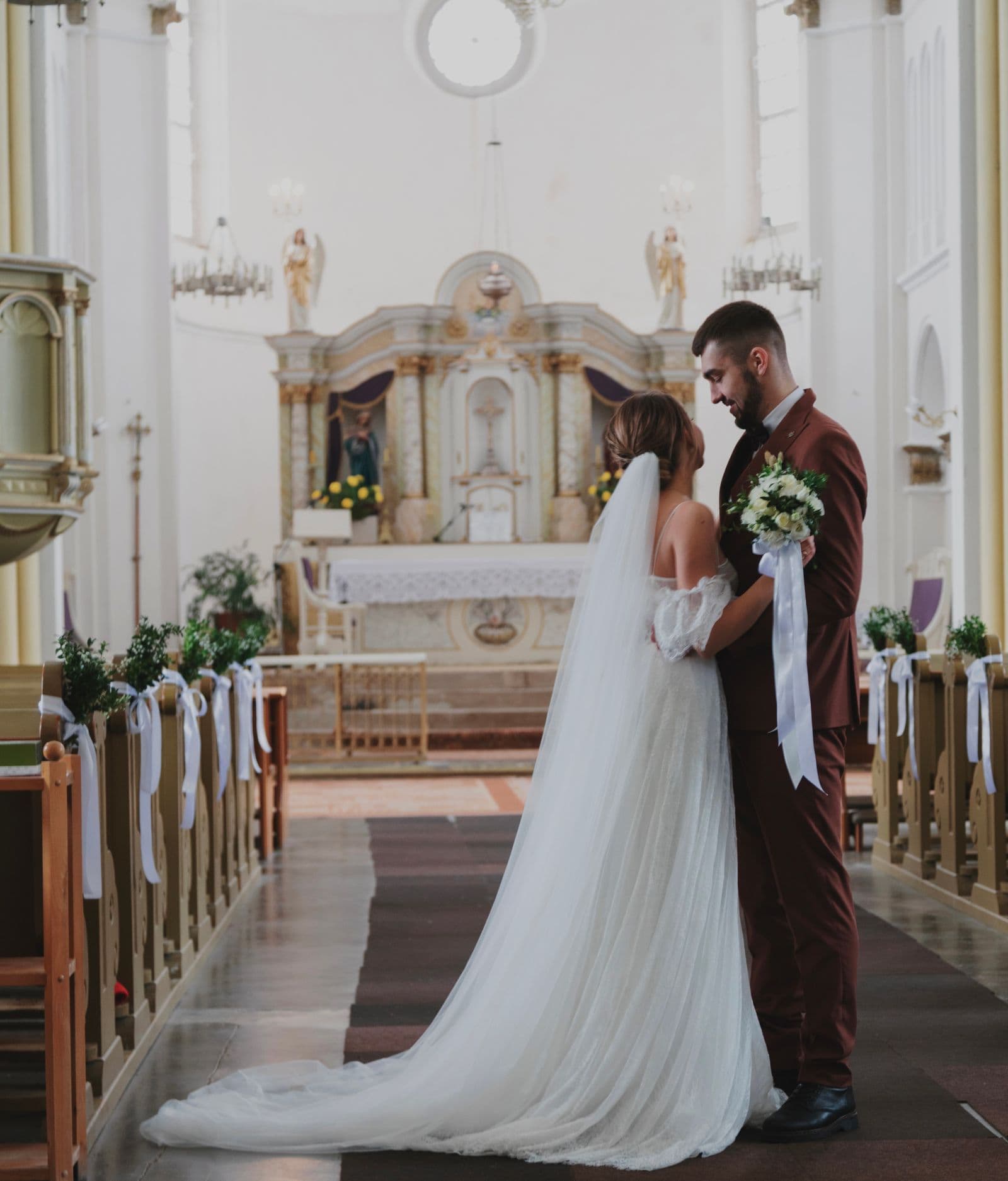
- The ceremony ordinarily happens in the Catholic parish church, with a priest or deacon presiding and receiving your vows. That is what "canonical form" means.
- Your minister is welcome, in a real role, but not as a co-officiant. An invited pastor may read Scripture, offer prayers, give a brief exhortation, and bless you both. What they may not do is preside or ask for and receive your consent alongside the priest. There is one ceremony, and one person receives the vows.
- There is an exception, and it is a good one. For serious pastoral reasons the bishop can grant a dispensation from canonical form, which allows the wedding to take place in your church with your pastor presiding, and the Catholic Church still recognizes the marriage as valid. The classic case: the bride's father pastors the church she grew up in. Ask the priest about this early rather than assuming the answer is no.
One practical note. Mixed marriages are often celebrated with the Rite of Marriage outside of Mass, since most guests would not be receiving communion anyway, and many couples find that version warmer for a room drawn from two churches. Ask your priest what he recommends. Our Catholic wedding ceremony order lays out both versions step by step.
Two Protestant denominations: usually simpler than you fear
If you are Presbyterian and he is Baptist, or you are Methodist and she grew up non-denominational, you have far more freedom than the section above. Co-officiating is normal and often lovely. Two pastors splitting the service is not a compromise, it is a picture of two church families welcoming a new household.
The questions worth asking anyway:
- Does either church require membership, or its own premarital counseling, before the pastor will officiate?
- Is an outside minister welcome to preach from that church's pulpit? Most say yes. A few do not.
- Any rules about music, photography, alcohol at the reception, or decor in the sanctuary?
- Who leads which part? A clean split: one pastor gives the message, the other leads the vows and rings, and both pray.
Compare the two orders of service side by side before you write anything. Our Presbyterian, Baptist, and non-denominational templates make the overlap obvious, and there is usually more overlap than difference. For the shared backbone that nearly every Protestant service follows, see our guide to the Christian wedding ceremony order.
Orthodox and another Christian tradition
Orthodox churches have their own clear requirements, and they vary a little by jurisdiction (Greek, Antiochian, OCA), so your parish priest is the authority here, not the internet. In general:
- The non-Orthodox partner must be a baptized Christian, baptized with water in the name of the Father, the Son, and the Holy Spirit.
- The marriage is celebrated by an Orthodox priest, in an Orthodox church, according to the Orthodox rite. An Orthodox Christian married outside the Church typically loses good standing and the ability to receive communion, which is a serious matter worth discussing with the priest early.
- A non-Orthodox clergy member does not co-celebrate the Betrothal and Crowning.
- The sponsor (koumbaros or koumbara) must be an Orthodox Christian in good standing.
The service itself is beautiful and unlike most Western ceremonies, with crowns, a common cup, and the procession around the table. If half your guests will be seeing it for the first time, walk them through it in the program. Our Orthodox wedding ceremony order explains each part in plain language, which makes that note easy to write.
How to honor both traditions in one ceremony
The goal is one ceremony that flows like a single story told in two voices, not a relay race. A few reliable ways to do that:
- Split the readings. One passage chosen by each family, or one from each tradition's usual favorites. Our list of Bible verses for weddings is grouped by theme, which makes it easy to find two that speak to each other.
- Split the music. A hymn her side will sing without looking at the sheet, and a worship song his side knows by heart. This is the change guests feel most.
- Use a unity ritual that belongs to neither side. A unity candle or a cord of three strands. Neutral ground carries a lot of meaning here, and our Christian unity ceremony ideas post has options with sample wording.
- Give the visiting clergy a real moment. The opening prayer, a reading, or the final blessing. A named, visible role signals respect far better than a seat in the second row.
- Let the vows stay the anchor. Both traditions put the promises at the center. Keep them there and the ceremony feels unified no matter who is standing where.
How to brief both families (before they ask)
Most of the hurt in a mixed-denomination wedding comes from surprise, not disagreement. Get ahead of it.
Tell each set of parents in person, together, early. Lead with the reasoning, not the verdict: "We are getting married at [Catholic church] because the Catholic Church needs the ceremony there, and [Pastor's name] is going to read Scripture and pray the blessing over us." A decision plus an honored role lands very differently than an announcement.
Write two or three lines for the program. Something like: "Our ceremony follows the Catholic Rite of Marriage. [Pastor's name] of [Protestant church] will read from Ephesians and offer the closing blessing. We are grateful to have both of our church families with us today."
Put the same explanation on your wedding website. Half your guests will never have set foot in the other tradition's sanctuary. A short "what to expect" note covering the length of the service, whether there is communion and who may receive it, when to stand or kneel, and dress expectations will save you a hundred texts.
Accept one another, then, just as Christ accepted you, in order to bring praise to God. (Romans 15:7)
A realistic order of operations
Here is the sequence that keeps you out of trouble, starting from when you get engaged:
- 12 to 18 months out: call the church with the firmest rules. Requirements, paperwork, lead times, and whether your date is even available.
- 11 to 15 months out: lock the church and the officiant, then tell both families in person with the reasoning and the roles. Start whatever premarital preparation each church requires.
- 4 to 6 months out: build the ceremony with both clergy in one conversation, ideally the same room. Confirm who does what, in writing.
- 2 to 3 months out: write the program note and the website explainer, and send both to each clergy member to check.
- At the rehearsal: get both clergy there if you possibly can. Ten minutes of awkwardness at the rehearsal beats ten minutes of it at the altar.
A shared wedding website does a surprising amount of work in a wedding like yours. It is one link where both church families find the ceremony details, the what-to-expect note, directions, and the RSVP form, so you are not explaining the plan twice to two different crowds. You can create your free AltarWed wedding website in about ten minutes, and update that explainer as your plans firm up.
Frequently asked questions about mixed-denomination weddings
Can a Catholic and a Protestant get married in a Catholic church?
Yes. The Catholic party obtains permission from the local bishop through their parish, and the wedding takes place in the Catholic church with a priest or deacon presiding. Your own minister can be invited to read Scripture, pray, speak briefly, and bless you, but does not co-officiate or receive the vows.
Can two ministers from different denominations officiate together?
Between most Protestant denominations, yes, and it is common. In a Catholic ceremony, no: there is one ceremony and one person who receives your consent, though the visiting minister can have a real speaking and blessing role. Orthodox ceremonies are likewise celebrated by the Orthodox priest alone.
Do I have to convert to marry someone from another denomination?
No. Neither Catholic nor Orthodox churches require the other partner to convert in order to marry, and Protestant churches do not either. Conversion is a matter of conscience, and deciding it under wedding-planning pressure is a bad idea for both of you.
Whose church should we get married in?
Start with whichever tradition has the firmest requirements, since the other side can usually flex. Then weigh which of you has the deeper tie to a congregation, where your families actually are, and which building you can picture yourselves standing in. Choosing a church is not choosing a winner.
What denomination will we raise our kids in?
Answer this before the wedding, not after. Catholic couples are required to discuss it as part of the permission process, and every mixed-denomination couple should. Christian premarital counseling is the right place for that conversation.
One last thing. The fact that this is complicated is not a bad sign about your marriage. It means two church families raised two people who take faith seriously enough for the details to matter. Handle the logistics with care, give both traditions a real place in the day, and what your guests will remember is not whose building it was. It is that the two of you made your promises before God with everyone who loves you in the room.