The RSVPs are trickling in, half your relatives still have not replied, and someone just asked whether Aunt Carol and her ex-husband can be kept on opposite sides of the room. If you are staring at a spreadsheet wondering how to make a wedding seating chart without losing an entire week to it, take a breath. This is one of the most solvable problems in wedding planning, and it becomes almost easy once you do the steps in the right order.
A seating chart is really an act of hospitality. Scripture calls us to "practice hospitality" (Romans 12:13), and few moments give you a better chance to live that out than the meal after your vows. This guide walks you through the whole process: what to do before you touch a single table, how to seat people so the room actually flows, how to handle divorced parents and blended families with grace, and how to print a "Find Your Seat" board your guests can read at a glance.
Do not start with the tables. Start with your guest list.
The single biggest mistake couples make is trying to arrange tables before they know who is actually coming. You cannot seat a guest who has not RSVP'd, and you will burn hours moving names around that later evaporate. So resist the urge to open the floor plan on day one.
Instead, get your guest list into one clean source of truth. One row per guest, with columns for their household or party, their meal choice, whether they have replied yes, and any notes (mobility needs, "seat near the band," "do not seat with"). A messy list is the reason seating charts spiral into all-nighters, so consolidate now if your RSVPs are scattered across texts, a spreadsheet, and your mom's phone calls.
Set your RSVP deadline about four to six weeks before the wedding. Your caterer usually needs a final headcount one to two weeks out, and you want a week of breathing room to do the seating itself. For where this falls in the bigger picture, our Christian wedding planning checklist maps out the whole timeline so the seating chart never sneaks up on you.
Seat by household, not by individual
Here is the mindset shift that saves the most time: you are not seating 140 individuals. You are placing roughly 50 or 60 households. A married couple, a family with two kids, a pair of college roommates. Move them as units and the puzzle shrinks by more than half.
Group your guest list into these natural clusters first:
- Immediate family on each side (parents, siblings, grandparents).
- Extended family that already spends holidays together.
- Church family and small group friends who worship alongside you.
- College and hometown friends who share history.
- Work friends from each of your jobs.
- Plus-ones and singles who will not know many people.
When you seat by these clusters, most tables build themselves. The goal is that every guest sits with at least a few people they already know and enjoy. That is where the honoring-one-another part of Romans 12:10 becomes practical: you are quietly making sure no one spends your reception feeling like a stranger.
A simple step-by-step wedding seating chart process
Once your list is clean and grouped, the actual chart comes together in a handful of steps. Do them in this order.
- Confirm the room and table shapes with your venue. Ask for the floor plan, how many tables fit, and what shapes are available. Round tables of eight to ten are the most social because everyone can see everyone. Long banquet tables feel modern and family-style but make cross-table conversation harder. Know your options before you assign anyone.
- Place the anchor tables first. Decide where you (the couple) will sit, then the parents, then the wedding party. Everything else radiates out from these fixed points.
- Drop in your household clusters. Fill tables with the groups you already made. Keep each table mostly one cluster, then use a friendly extra household or two to round it out to a full table.
- Handle the tricky guests deliberately. Divorced parents, exes who both made the list, the relative who argues politics at Thanksgiving. Give these their own focused attention rather than hoping they land somewhere fine.
- Keep a short list of "flex" guests. These are easygoing friends you can shuffle between tables to absorb late RSVPs without rebuilding the whole chart.
- Do not forget your vendors. Your photographer, videographer, and DJ or band usually need a meal. Seat them at a table near the back and count those plates in your catering number.
Head table, sweetheart table, or family table?
Where the two of you sit sets the tone for the whole room. There is no single "Christian" way to do this, so choose what fits your personalities and your families.
- Sweetheart table. Just the two of you at a small table for two, front and center. It is romantic, gives you a moment to breathe together, and sidesteps the question of which friends make the head table. Many couples love the few quiet minutes it buys them in the middle of a busy day.
- Head table. You and your wedding party (and sometimes their partners) at one long table facing the room. It keeps your closest friends beside you and photographs beautifully. The trade-off is deciding whether spouses and dates are included, which affects the count.
- Family table. You sit with both sets of parents and immediate family at a large round table. This is a warm, honoring choice that says your two families are becoming one. It works especially well when your wedding party is small or when you want your parents close.
Whatever you choose, position it near the center of the room so no guest has to strain to see you during toasts and your first dance.
Divorced parents and blended families, handled with grace
This is the part that keeps couples up at night, and it deserves gentleness rather than a rigid rule. Your wedding is not the place to relitigate old wounds, and it is not your job to fix relationships in one evening. Your job is to honor each parent and protect the peace of the day.
A few approaches that tend to work:
- Give each divorced parent their own table to host. Rather than seating estranged parents together, let each one anchor a table surrounded by their own close family and friends. Both feel honored, and neither feels cornered.
- Seat remarried parents with their spouse and that side of the family. A stepparent who has been present in your life belongs at a place of honor. Talk with your parents ahead of time about titles and seating so no one is surprised in the moment.
- Ask, do not assume. A quiet, private conversation with each parent weeks ahead ("here is roughly how I am thinking of seating things, does that feel okay?") prevents almost every reception-day surprise. Most parents rise to the occasion when they feel respected.
- Buffer with people they love. Surround a parent who might feel tender with the siblings, friends, or grandkids who make them feel at home.
"Be completely humble and gentle; be patient, bearing with one another in love." (Ephesians 4:2)
Approach these decisions with that verse in mind and you will make choices you can feel good about, even if they are not perfect. Grace, not geometry, is what family members remember.
How many people per table, and other layout questions
A few quick answers to the questions that slow couples down:
- How many per table? Eight to ten at a round table is the sweet spot for conversation. Squeezing twelve in makes it hard to hear across the flowers.
- Do kids get their own table? Older kids often love a "kids' table" with an activity or two. Little ones usually do better next to their parents.
- Assigned seats or just assigned tables? Assigning guests to a table (not a specific chair) is the easiest path and works for most receptions. Save specific seat assignments for the head or family table, or a formal plated dinner.
When to finalize your seating chart
Start a rough draft once about 80 percent of your RSVPs are in. Do not wait for the last stragglers, or you will be doing the whole thing in a panic. Fill in the remaining seats as replies arrive, leaning on your flex guests to absorb the changes.
Lock the final version a few days after your RSVP deadline, roughly one to two weeks before the wedding. That gives your caterer their headcount and your printer time to make the display. Build in one round of last-minute edits, because there is almost always a cancellation or a surprise plus-one in the final week.
Printing a "Find Your Seat" board your guests can actually read
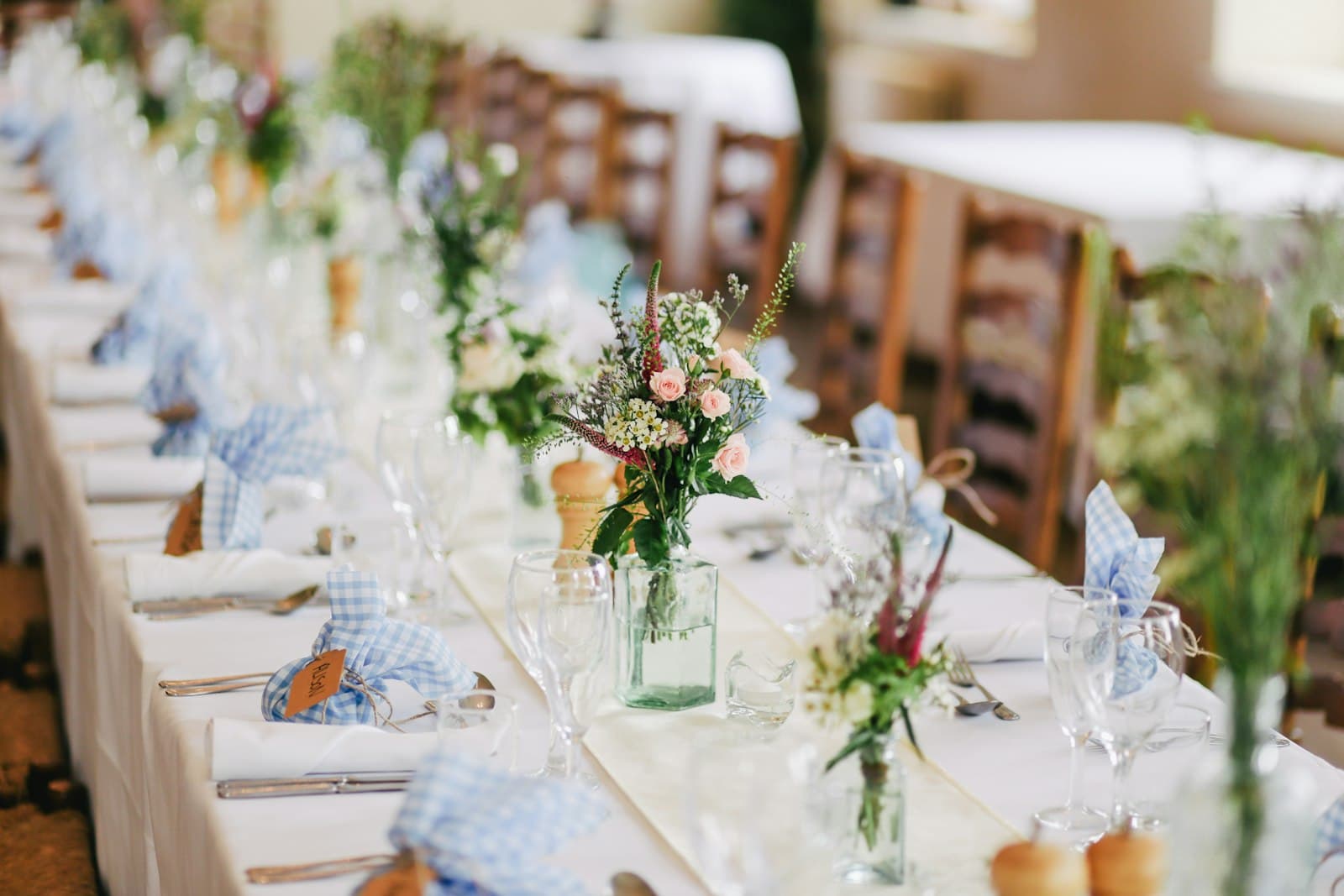
When guests walk into the reception, they should be able to find their table in about ten seconds. A clear seating display does that. You have two common formats:
- Alphabetical by guest name. The kindest option for guests. List every name (last name works well for large weddings) with their table number beside it, sorted A to Z. People find themselves instantly.
- Grouped by table. A heading for each table with the guests listed underneath. This looks lovely but forces guests to scan every table to find their name, so it suits smaller weddings.
Whichever you choose, keep the type large and high-contrast, give it a title that fits your day ("Find Your Seat" or "Please Join Us at Your Table"), and place it right where guests enter the reception so it never causes a bottleneck. If you want the wording on your board and signage to feel of a piece with the rest of your stationery, our guide to Christian wedding program wording has language and tone you can borrow.
This is also where doing your guest list digitally pays off. Inside your free AltarWed wedding website you already have a guest list with RSVP tracking, so the people who replied yes are the exact people you seat. From there you can arrange tables with a drag-and-drop seating chart and print a clean "Find Your Seat" board straight from the same list, with no retyping and no version-mismatch between your spreadsheet and your sign. When a late RSVP comes in, you update one place and the board updates with it.
Frequently asked questions about wedding seating charts
Do we really need a seating chart, or can guests sit anywhere?
For a cocktail-style or very small gathering, open seating can work. For a seated dinner of more than about 40 guests, a chart is a genuine kindness. It spares older relatives from hunting for a seat, keeps friend groups together, and prevents the awkward shuffle of couples split across the room. Assigning tables (not specific chairs) gives you the ease of a chart without the fuss of place cards.
What do we do when someone RSVPs after the deadline?
This is exactly what your flex guests are for. Slide an easygoing friend to another table to open a seat, or add a chair to a table that has room. If you manage your guest list and seating chart in one tool, updating a single record adjusts both the table and your printed board.
Should the wedding party's dates sit at the head table?
It is your call. Including partners keeps couples together and feels inclusive, but it grows the head table quickly. A common compromise is a sweetheart or family table for the two of you, with the wedding party and their dates seated together at nearby tables. No option is more correct than another, so choose what makes your closest people feel honored.
How do we seat guests who do not know anyone else?
Look for a bridge. Seat a lone college friend with other friends from that season of life, or place a solo coworker beside your most welcoming, talkative relatives. The goal is that everyone has at least a couple of people at their table they can easily talk to.
The heart behind the chart
A seating chart is a small, quiet way to love the people God has placed in your life. When you seat the widowed grandmother beside the great-grandchildren who adore her, you are showing hospitality in the truest sense. Do the steps in order, lead with grace over perfection, and let the room fill with the people who came to celebrate what God is doing in your marriage.
When you are ready to make the whole process easier, create your free AltarWed wedding website. Your guest list, RSVP tracking, drag-and-drop seating chart, and printable "Find Your Seat" board live in one place, so building your chart takes an afternoon instead of a week.